Power As An Archetype - From Control To Stewardship
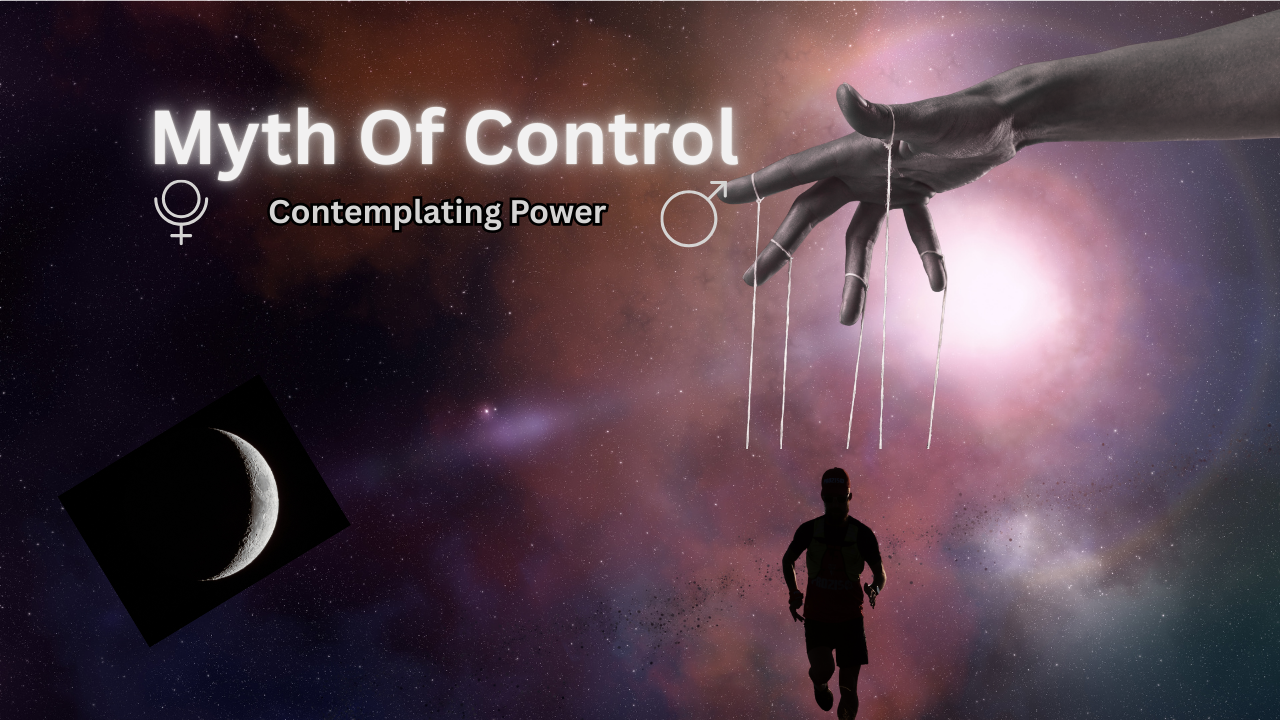
Click above for the full Podcast on YouTube
Power is one of those words that can make people tense. We have all seen it abused and we have also all needed it. When you look at power as an archetype, it stops being only out there in politics or institutions and becomes something closer and more honest, a force that lives in relationships, in systems, and in the inner life.
At its simplest, power is the capacity to affect outcomes. It’s the ability to set terms, shape reality, protect boundaries, make decisions, and influence what happens next. The archetypal question isn’t do you have power, it is how are you using it and what is it doing to you?”
Most conversations about power stay in the human realm, authority, control, influence. But power also exists beyond us, it shows up as rhythm. within nature and in the sky. This matters, because when we forget that some power is uncontrollable, we tend to compensate by trying to control everything we can.
A helpful way to keep your thinking clear is to notice that power comes in different forms, and not all of them are domination.
Four modes of power (and why you need all of them)
Power over is the ability to enforce, command or stop harm. In its healthy form, it protects, a parent pulls a child away from danger or a community draws a firm line around abuse. In its shadow, it becomes control for control’s sake, intimidation, punishment and coercion.
Power to is capacity, skill and competence, it is the ability to act and how we turn intention into movement. In its healthy form, it creates options and freedom but in its shadow, it becomes ego the motivation that says “I can, so I should,” or “I’m only worthy when I’m capable.”
Power with is collective strength, we see it in cooperation, coalition and shared strategy. In its healthy form, it’s solidarity and mutual protection. In its shadow, it can become groupthink, social policing, or a mob dynamic that crushes nuance.
Power within is inner authority: self-trust, integrity, the ability to stay connected to your values even under pressure. In its healthy form, it’s calm clarity. In its shadow, it can harden into spiritual pride, rigidness, or “I’m above this” detachment.
A lot of pain comes from over-using one mode and under-developing another. If you only trust “power within,” you may avoid necessary conflict. If you only trust “power over,” you may confuse control with safety. If you only trust “power with,” you may outsource your judgment to the group.
And then there’s another kind of power we often forget to name.
Power beyond the human: the Moon, the Sun, and the force of rhythm
Some power doesn’t belong to anyone, it doesn’t negotiate nor does it care how good we are, how spiritual we are, or how prepared we feel. It simply moves.
The Moon pulls the tides and the Sun gives life but can also flare. Day becomes night, winter becomes spring and our bodies sleep and wake. Even if we never look up, we live inside these forces.
This is power as rhythm not as a form of domination nor moral superiority and not even intention. It’s the kind of power that shapes life by being consistent, vast, and inescapably relational.
The Moon’s power works through pull. It draws us back to what we can’t outrun, our emotional weather, our needs, our limits, our cravings, our fatigue and our longing for belonging. The Moon is a reminder that we’re cyclic and that we are tidal. We carry memory in the body. You can decide you’re “fine” and still feel the undertow of grief, desire, or fear tugging at your choices.
Solar power is easier to recognise because it is visible. The Sun is the daily rhythm of light and dark. It gives warmth, growth, energy, and direction. It also demands something from us, we cannot live in permanent darkness and call it health. But the Sun isn’t only gentle life-force, it exposes and intensifies and can overheat a system. The same energy that sustains life can also disrupt it.
When you put Moon and Sun together, you get a deeper definition of power than “who wins.” Power is also what sets the tempo. The Moon governs return and integration whilst the Sun governs direction and expression.
A lot of suffering comes from trying to live solar-only in a lunar body. Solar-only living can be constant output an always-on productivity, endless goals, perpetual growth and never enough rest nor softness. It can “work” for a while but then the lunar truth arrives, the body collapses, the emotional backlog surges, relationships strain and meaning thins out.
Lunar-only living looks like endless processing, staying in the inner world, looping in feelings, waiting for certainty before acting. It can feel safe. Then the solar truth arrives we realise that life requires participation, choices, limits and action.
This matters for the archetype of power because it shows the difference between control and relationship. Some power can be negotiated with and some power can only be honoured. If we don’t honour rhythm, we tend to try to dominate ourselves and others to compensate.
Where power actually comes from
Power also has practical ingredients and it is often quiet and ordinary.
Position: roles, titles, hierarchy (manager, parent, teacher, priest, “the eldest”).
Resources: money, time, housing, access, transport, childcare.
Force: threat, punishment, exclusion, retaliation.
Knowledge: expertise, information, secrecy, who knows what.
Social capital: networks, reputation, popularity, belonging.
Charisma: persuasion, presence, magnetism.
Moral or spiritual authority: values, virtue, “truth,” divine sanction.
If you want to understand a power dynamic quickly, just work out who controls access, or who can withdraw something essential (love, money, belonging, safety, approval)? Who is it that gets believed by default? Who is allowed to be angry and who gets punished for it?
Power across autonomy, family, culture, politics and faith
Autonomy: Autonomy isn’t just independence. It’s the ability to make real choices without being emotionally, financially or morally cornered. Power dynamics show up as internalised rules (“Good people don’t say no,” “Anger is dangerous,” “My needs are selfish”) and as external pressures (dependency, fear of conflict, threats of abandonment). Healthy power supports autonomy by making consent real and not just theoretical.
Family: Families transmit power through roles, loyalty contracts, and unspoken rules. Sometimes love becomes currency when affection is given only if you comply and is withdrawn when you don’t. Sometimes care becomes leverage and is clear in the phrase “After all I’ve done…” Sometimes the family story is a form of governance, “In this family we don’t…” Much family power isn’t about cruelty nor abuse it’s about anxiety, people often reach for control when they don’t know how to feel safe themselves.
Culture: Culture teaches what is “normal,” what is “respectable,” what is shameful and what is allowed. Cultural power is the power of the unspoken script. It often operates through status, language, tone, and who gets labelled “difficult.” You can feel cultural power when you notice you’re editing yourself before you’ve even spoken.
Politics: Political power is the distribution of decision-making at scale. It includes institutions, laws, enforcement, and narratives, it is what counts as legitimate, whose needs are prioritised and what is made invisible. Political power doesn’t only show up in elections, it shows up in access to housing, healthcare, safety, education, and voice.
Faith and belief: Faith can be a genuine source of meaning and healing but it can also become a place where power hides behind righteousness. It is apparent when “truth” is used as a weapon and harm starts feeling justified. When belonging is conditional upon obedience, this is where our conscience can be outsourced. Healthy spiritual power tends to enlarge a person’s capacity for responsibility, humility, and compassion. Unhealthy spiritual power tends to shrink it into fear, shame, and control.
The shadow of power and how it distorts
A grounded way to see shadow power is with the image of fear wearing armour.
The tyrant says, “I must control.” Underneath is often a terror of uncertainty, betrayal, or weakness.
The manipulator says, “I won’t ask directly, I’ll pull strings.” Underneath is fear of rejection or conflict.
The ideologue says, “I’m right, so I’m justified.” Underneath is fear of moral complexity.
The technocrat says, “It’s just policy.” Underneath is fear of personal accountability.
The seducer says, “I’ll bind you with attention, desire, approval.” Underneath is fear of being ordinary or alone.
Lunar shadows can be over-identifying with mood, living from reaction, getting stuck in longing or fear, using “I feel” as a final verdict rather than information.
Solar shadow can be over-identifying with identity and performance, equating worth with productivity, refusing rest, needing certainty as a weapon.
The point isn’t to shame any of it, the point is to recognise when one force is driving the whole vehicle.
The power of powerlessness
There’s a shadow that doesn’t look like power at all it is expressed through martyrdom, appeasement and chronic “I have no choice.” Sometimes people are genuinely constrained but sometimes “powerlessness” becomes a strategy. It becomes a way to avoid risk, conflict or responsibility. Sometimes staying powerless protects a person from being blamed, rejected, or outgrowing their role in the system.
A useful question we can ask ourselves in a gentle but direct way is “what do I gain by staying where I am?”
The initiation of mature power
In archetypal terms, power matures when it becomes stewardship.
Mature power can be questioned and it doesn’t need to punish dissent. It can set boundaries without humiliation and say no without cruelty. It can repair after harm instead of defending an image. Mature power understands proportional response and that not everything requires escalation.
This is where the “beyond-human” power actually helps. The Moon and Sun teach that life is cyclical and directional. There’s a time to act and a time to rest, a time to build and a time to compost. Stewardship is, in part, learning to live by rhythm instead of panic.
You can often recognise integrated power by these signals, it’s clear, accountable and definitely not performative. It doesn’t need you to shrink so it can feel big and it doesn’t need to deny the uncontrollable to feel safe.
A few prompts to work with
Where do I confuse control with safety?
Where do I use care as leverage, even subtly?
Where do I outsource my authority to a person, a group, or a belief system?
What am I afraid would happen if I set a clean boundary?
What is the currency in this dynamic (approval, money, belonging, access, morality)?
If I acted as a steward here, what would change this week?
Where do I need more “power to” (capacity) instead of more “power over” (control)?
Where am I living solar-only, and what is it costing me?
Where am I living lunar-only, and what is it postponing?
What would repair look like, and what stops me from offering it?
Power is not the opposite of love. In its mature form, power protects love, life and dignity. The work is learning the difference between power used to create safety and power used to avoid feeling.
When power becomes stewardship, it stops being a fight for the throne and becomes a practice of integrity. And when we remember the Moon and Sun — the pull and the life-force, the tide and the flame — we remember that not all power is ours to command. Some power is ours to honour. That humility is not weakness, it is wisdom.